
Dispute Resolution and Peacebuilding at APCfC
Dispute resolution and peacebuilding have been central to the mission of The Association of Pastoralist Community for Change (APCfC)—formerly known as the Oromia Pastoralist Association (OPA)—since its inception. For two decades, APCfC has played a vital role in fostering social cohesion, promoting collaborative reintegration of conflict-affected communities, and turning resource scarcity into a catalyst for cooperation rather than conflict.
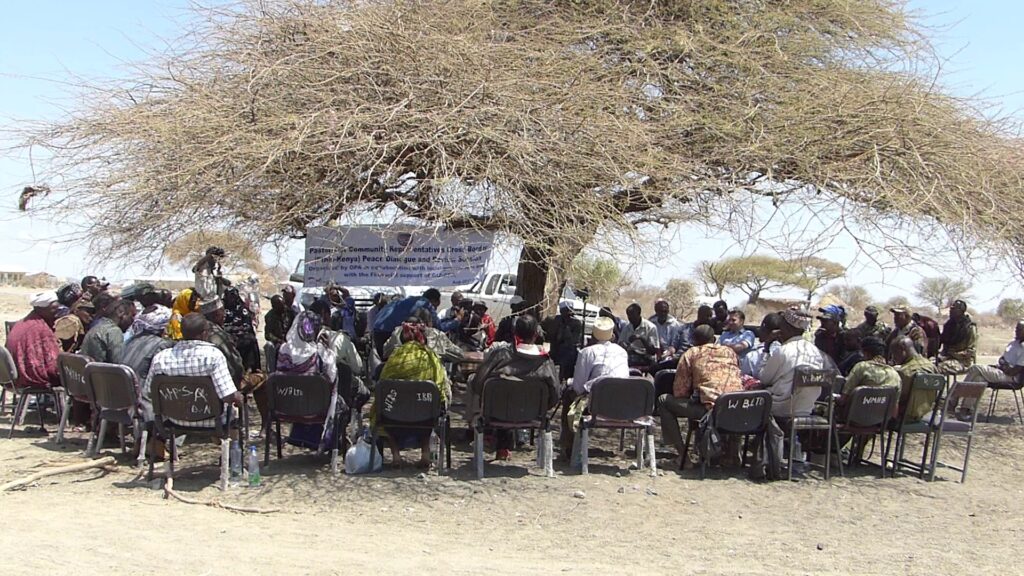
- Multiple actors, some located far from the conflict zones.
- Interconnected causes, spanning social, legal, political, and economic dimensions.
- Local disputes that escalate into broader regional and national challenges.
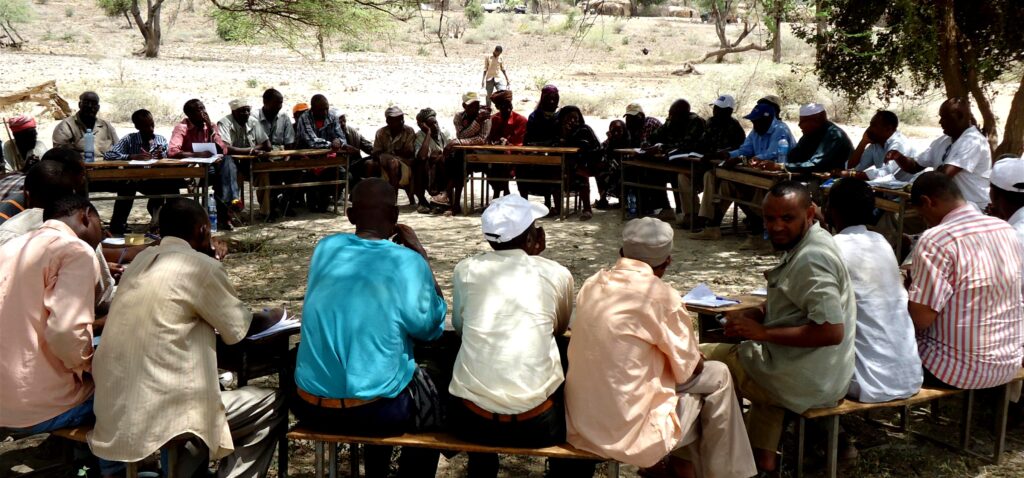


- Unhealthy competition over scarce natural resources, especially grazing lands and water sources.
- Ethnic and cultural biases that fuel mistrust and division.
- Disputes over land administration boundaries, among communities further feuled by elite and poleticians.

- Understanding and Engagement: Sustainable solutions to the complex security challenges facing pastoral and agro-pastoral societies require a deep understanding of the social order, values, and dynamics of dry-land ecosystems.
Effective peacebuilding must involve inclusive engagement of all stakeholders, especially youth and women.
APCfC advocates for an interactive, process-oriented, and forward-thinking approach, in contrast to the often non-inclusive, top-down “fire brigade” methods employed by local state actors. - Revitalizing Indigenous Practices: Strengthening centuries-old indigenous practices is crucial. These practices have historically enabled pastoral and agro-pastoral communities to coexist peacefully with each other and with nature.
Through customary negotiated systems, communities have managed natural resources and resolved conflicts with a focus on reconciliation, forgiveness, and restoration of cooperative behavior.
Our Strategic Objective
APCfC remains committed to supporting pastoralist communities affected by conflict to:
▶ Engage in constructive dialogue.
▶ Pursue negotiated settlements of disputes.
▶ Establish inclusive, reciprocally agreed and codified arrangements that sustain peace and cooperation.
Our Key Peace Building Interventions
Current interventions:

Currently, through the following local project-based interventions, we are further working to ensure communities affected by lack of peace and trust improve their cooperation through negotiation and reciprocally agreed principle to improve their cooperation and social cohesion for improving their livelihoods and development.
▶ “Infrastructures for Dialogue” (I4D) Programme” is being financed by GIZ-Civil Peace Service Program in Ethiopia (2023-2026) with the overall objective of enhancing capacities for inclusive and non-violent conflict transformation approaches for building constructive relationships with groups affected by violence to engage in constructive dialogues.
▶ “Enhancing local capacities and practices for social cohesion and harmony” project is a one-year project (2024-2025) funded by Irish Aid through Embassy of Ireland in Ethiopia with the overall aim for promoting social cohesion and a culture of peaceful coexistence among the Borena, Garba, and Geri communities across regional boundaries in Oromia and Somali regions in Ethiopia.
▶ “Resilience, Empowerment and Sustainable Economic Wellbeing for Vulnerable Communities in Borena zone, Ethiopia” is a Nexus (peace, livelihoods and humanitarian) project under implementation (2023-2027) with the peace outcome of the project focusing for communities in conflict affected areas are resolving conflict and/or promoting peaceful coexistence. The project is under implementation in Dire and Moyale Woredas in Oromia region funded by Trõcaire/CST-Ethiopia.
Recent interventions:

Some of the projects being implemented around community-based dispute resolution and peace building area by OPA are:
▶ “Peace building and conflict transformation Project”: A GIZ-Civil Peace Building funded program since 2008. Through the current (third phase- 2018-2020) program, the intervention has focused on promoting culture of dialogue on trust-based land and resource management in Southern Ethiopia (Borana Zone), East Showa (Fentalle Woreda), and West Guji (Galana Woreda) through dialogue for inclusive transformation of resource conflicts and sustainable use of natural resources.
▶ “Pastoralist community dispute resolution and peace building project”: A Five-year (Dec 2013 to January 2019) project funded by Trõcaire through CAFOD, SCiAF, Trõcaire-CST Ethiopia Joint Office with the aim to improve culture of peaceful coexistence among pastoralist communities in and around Borana zone through traditionally negotiated and codified customary dispute settlements. Moyale, Dhas, Dire, Yabello, and Arero were the five project target areas.
▶ “Non-violent dispute resolution and capacities for peace building project”: A 27-month (about 2 and a half years) intervention in Borana zone (Arero, Yabello, Dillo, Teltelle, and Moyale Woredas) from 2014-2016, Financed by Ethiopia-European Union Civil Society Fund-II with the overall aim to promote non-violent dispute settlement culture and peaceful coexistence of pastoral societies in Southern Ethiopia through community-managed and government-supported arrangements.
▶ “Local conflict transformation and peace building project”: Facilitation for the transformation of local conflicts and integration of experiences into regional contexts in Southern-Ethiopia and Northern Kenya implemented from 2011-2017 on yearly base contract funded IGAD/CEWERU- Ethiopia country office through Inter Africa Group (IAG).

Key Results and Impacts
Through our local community-based dispute resolution and peace building interventions we have been able to directly be reached out to 350,000+ pastoralists and agro-pastoralists and over 1.5 million people across and beyond our target intervention areas have indirectly benefited from the improved peace and security that have strengthened their social and economic relationships.

Case Stories


Our Next Plans

