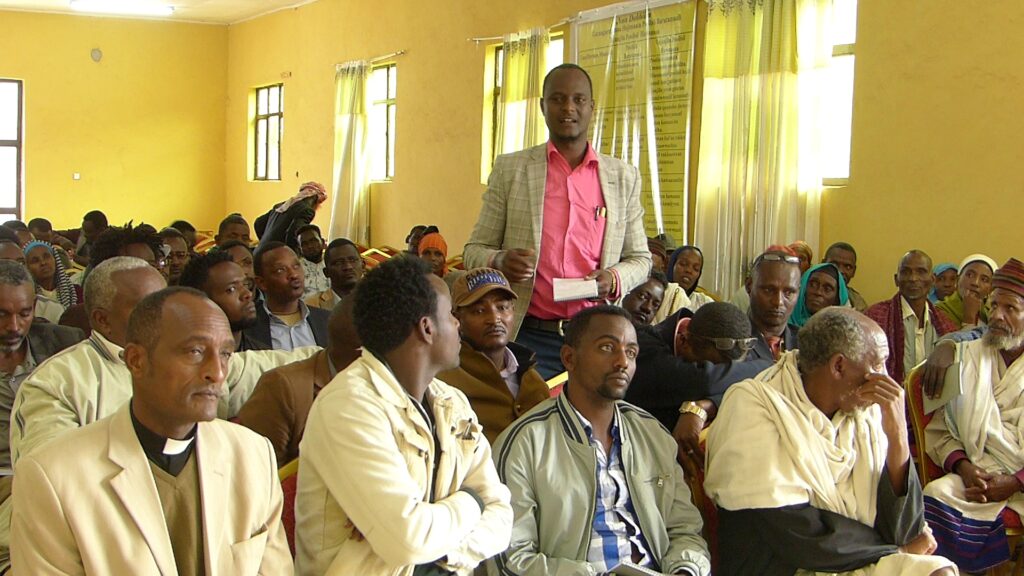
Through our past and ongoing community-based advocacy initiatives, APCfC has contributed to a range of significant outcomes that have strengthened the voice, rights, and resilience of pastoralist communities in Ethiopia. Key impacts include:
⫸ Strengthened Policy Engagement and Community Capacity: Enhanced the capacity of pastoralist communities to generate and communicate evidence-based policy issues to local and national decision-makers. In addition, it created meaningful platforms for pastoralist representatives to engage with policymakers on food security and development issues at both local and national levels.
⫸ Climate Change Advocacy and Local Adaptation: Facilitated numerous community consultations and dialogues to co-design and promote locally led climate change adaptation strategies. Supported communities in advocating for government action on climate-related loss and damage, ensuring that local voices influence national and international climate policy discussions.
⫸ Communal Land Rights and Tenure Security: Highlighted the critical importance of addressing communal land tenure. In response, the Oromia Regional Government has initiated a study to develop appropriate land use and administration frameworks. Also played a proactive role in the design and partial implementation of communal landholding title certification for three traditional rangelands in Borena, based on centuries-old customary land management practices. As a result of our advocacy, Borena pastoralists received Ethiopia’s first-ever communal landholding titles. This historic achievement secured collective land rights for over 40,000 households (approximately 255,000 people), covering 2.7 million hectares. This has helped reduce land-related tensions and encouraged investment and sustainable land use.
⫸ Livestock Insurance and Risk Protection: Contributed to the adoption of a protection-oriented livestock insurance framework. The Index-Based Livestock Insurance (IBLI) program has been piloted in Borena to compensate pastoralists for livestock losses, enhancing their resilience to climate shocks.
⫸ National Recognition and Policy Inclusion: Successfully advocated for the inclusion of pastoralism in Ethiopia’s national agenda. As a result: Pastoral issues have been debated in Parliament. Pastoral institutions have been established at federal and regional levels. Ethiopian Pastoralist Day (EPD) has been officially recognized as a national observance. Pastoralist concerns have been integrated into national and Oromia regional strategic plans.
⫸ Infrastructure and Communication Access: Raised awareness about the importance of basic infrastructure and communication tools—such as mobile phones—for mobile pastoralist communities. These concerns have received positive responses from the government and are being addressed.
⫸ Land Rights and Investor Accountability: Brought regional/local and national attention to the issue of forced evictions of pastoralists by investors. Advocacy efforts have led to increased government responsiveness and recognition of pastoralists’ constitutional land rights.