Advocacy

“We empower communities to lead their own change”

Overview of our local Advocacy initiatives

For nearly two decades, the Association for the Promotion of Community-led Development in the Face of Climate Change (APCfC), formerly known as OPA, has pursued a central strategic objective: to empower and mobilize pastoralist communities in the Oromia region to actively participate in policy advocacy. This effort aims to influence policymakers toward the development and implementation of appropriate and responsive policies that address the complex and interconnected economic, environmental, social, cultural, and political challenges faced by pastoralist and agro-pastoralist communities within and beyond our target areas in Ethiopia. In response to the persistent marginalization of pastoralist communities and the exclusion of their indigenous systems from policy and decision-making processes, our organization has served as a pioneering, community-based civil society actor. We have played a critical role in bringing attention to the challenges facing pastoralism and in advocating for the recognition of pastoralists at multiple levels of governance.

Through sustained collaboration and networking with a broad range of local, national, and international stakeholders, we have consistently championed the vital role of pastoralism in both local and national development. Our advocacy has focused on securing recognition for indigenous pastoral institutions, promoting effective rangeland governance, safeguarding pastoral livestock assets, and supporting the development of markets for livestock and livestock products.
Moreover, we have emphasized the importance of gender equality and inclusive development strategies. This includes advocating for legal and political frameworks that acknowledge and strengthen the role of pastoralist women in socio-economic and political spheres. We have focused on enhancing the knowledge and capacity of communities and their institutions regarding their rights and roles in shaping policy debates and influencing decision-making processes. Through targeted capacity-building initiatives, we have supported pastoralists and their local institutions in generating evidence-based policy arguments and translating these into clear, actionable advocacy messages.

Objectives of Our Advocacy work

Strengthening local capacities for the engagement and coordination of community groups and customary institutions in local and national policy processes for promoting inclusive, accountable, and transparent policy formulation and implementation is an overarching aim of our advocacy thematic area. We do this through:

Awearness raising

Improving knowledge and ability of our communities and their institutions around the rights and roles of citizens in shaping policy debates and influencing decision-making processes.

Capacity building

Providing capacity building supports for pastoralists and their local institutions to effectively participate in generation of evidence-based policy related arguments and for the translation of those arguments into concise advocacy messages

Collaborations

Strengthening the coordination and collaboration of pastoral associations and networks to develop and communicate consolidated and evidence-based policy positions.

Advocacy

Supporting for the appropriate translation and enforcement of favorable legal policy frameworks to the grassroots level.

PROTECTION

Our Approaches

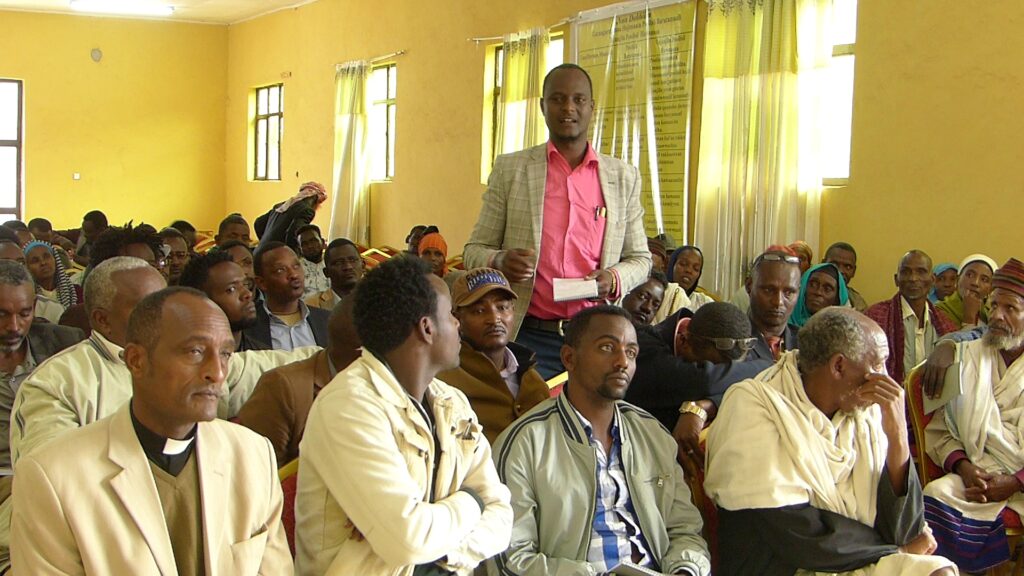
As a community-based pastoralist association, to ensure a locally owned advocacy agenda, we primarily focus on bringing our members, community leaders, local pastoralist community-based organizations and influential people together to jointly identify policy priorities, develop evidence-based messages supported by further assessments, design message communication methods, and communicate their policy messages to local and national decision-makers using various available platforms. Some of the specific intervention approaches are described below.

Awareness Raising:

Educating communities on their rights and policy frameworks.

Consultations and Dialogues:

Facilitating inclusive forums for community-government engagement.

Capacity Building:

Enhancing the ability of pastoralists to generate and communicate evidence-based policy messages.

Action Learning and Communication

Promoting adaptive learning and strategic communication.

Collaboration & Coordination:

Building alliances with local, national, and regional actors to influence policy.

Some interventions and results

Over the years, our organization—APCfC—has actively engaged in a range of advocacy initiatives through close collaboration, networking, and effective partnerships with pastoralist communities, local groups, national and international civil society organizations, and donor partners. Below are key project interventions that reflect our commitment to advancing the rights and resilience of pastoralist communities.

“Nexus- “Resilience, Empowerment and Sustainable Economic Wellbeing for Vulnerable Communities in Borena zone, Ethiopia”

This an on-going a five-year initiative under implementation since 2023 funded by Trõcaire/CST-Ethiopia in Gololcha, Degaga Bede, Laga sure, and Dire and Moyale Woredas, Borena zone as nexus intervention which includes supporting rural women and older adolescent girls to engage in local advocacy for their rights. In partnership with key stakeholders, we are developing community-led advocacy strategies that address barriers and promote enablers for women’s leadership in socio-economic and political spheres.

Integrated Humanitarian Assistance and Strengthening Community Led Resilience to Drought via Multi-Purpose cash Assistance (MPCA):

APCfC is advocating for a shift toward locally led humanitarian responses. This includes promoting resilience, reducing vulnerability, increasing accountability to disaster-affected populations, and recognizing the critical role of community-based organizations. We are also piloting multi-purpose cash assistance and survivor-led disaster response models.

Supporting Locally Led Food Systems Transformation (2023):

With support from the International Institute for Environment and Development (IIED), APCfC conducted community-level dialogues and assessments in Borena Zone to identify sustainable and scalable food system transformation practices. The project explored how existing policies could be applied locally and identified opportunities for community participation in food system governance.

Climate Change Adaptation Advocacy (2022–2023):

Supported by the Global Green grants Fund (GGF), APCfC facilitated local consultations and dialogues to co-design and promote locally led climate change adaptation strategies. The initiative empowered communities to demand action from decision-makers and contributed to shaping policies on climate-related loss and damage by amplifying community voices.

Participation for Change Project (2014–2016):

Implemented in Borena Zone with funding from the International Union for Conservation of Nature (IUCN), this project aimed to strengthen local participation in policy processes to improve food security in dryland areas. It directly reached over 3,500 individuals and enhanced the capacity of pastoralists to engage in evidence-based decision-making. The project also created opportunities for dialogue with policymakers at local, national, and cross-border levels, and supported innovative community-led initiatives to generate practical insights into dryland food security.

Promotion of Local Participation and Decision-Making (2008–2010):

With financial and technical support from the Pastoralist Communication Initiative (PCI), APCfC (formerly OPA) facilitated a wide-reaching initiative that directly engaged over 5,000 individuals. Activities included community consultations, large-scale gatherings with pastoralist representatives from Ethiopia and abroad, intra- and inter-community dialogues, and forums with policymakers. These engagements addressed critical issues such as environmental resource management, market access, and conflict resolution. This initiative played a pioneering role in opening national and regional debates on pastoralism across the Horn of Africa.

Through our past and ongoing community-based advocacy initiatives, APCfC has contributed to a range of significant outcomes that have strengthened the voice, rights, and resilience of pastoralist communities in Ethiopia. Key impacts include:
Strengthened Policy Engagement and Community Capacity: Enhanced the capacity of pastoralist communities to generate and communicate evidence-based policy issues to local and national decision-makers. In addition, it created meaningful platforms for pastoralist representatives to engage with policymakers on food security and development issues at both local and national levels.
Climate Change Advocacy and Local Adaptation: Facilitated numerous community consultations and dialogues to co-design and promote locally led climate change adaptation strategies. Supported communities in advocating for government action on climate-related loss and damage, ensuring that local voices influence national and international climate policy discussions.
Communal Land Rights and Tenure Security: Highlighted the critical importance of addressing communal land tenure. In response, the Oromia Regional Government has initiated a study to develop appropriate land use and administration frameworks. Also played a proactive role in the design and partial implementation of communal landholding title certification for three traditional rangelands in Borena, based on centuries-old customary land management practices. As a result of our advocacy, Borena pastoralists received Ethiopia’s first-ever communal landholding titles. This historic achievement secured collective land rights for over 40,000 households (approximately 255,000 people), covering 2.7 million hectares. This has helped reduce land-related tensions and encouraged investment and sustainable land use.
Livestock Insurance and Risk Protection: Contributed to the adoption of a protection-oriented livestock insurance framework. The Index-Based Livestock Insurance (IBLI) program has been piloted in Borena to compensate pastoralists for livestock losses, enhancing their resilience to climate shocks.
National Recognition and Policy Inclusion: Successfully advocated for the inclusion of pastoralism in Ethiopia’s national agenda. As a result: Pastoral issues have been debated in Parliament. Pastoral institutions have been established at federal and regional levels. Ethiopian Pastoralist Day (EPD) has been officially recognized as a national observance. Pastoralist concerns have been integrated into national and Oromia regional strategic plans.
Infrastructure and Communication Access: Raised awareness about the importance of basic infrastructure and communication tools—such as mobile phones—for mobile pastoralist communities. These concerns have received positive responses from the government and are being addressed.
Land Rights and Investor Accountability: Brought regional/local and national attention to the issue of forced evictions of pastoralists by investors. Advocacy efforts have led to increased government responsiveness and recognition of pastoralists’ constitutional land rights.

advocacy

Our Future plan

APCfC will continue to proactively work at grass roots level empowering the local community to understand the policy environment, engage in evidence-based design and communication of policy issues with policy architects and local decision-makers for influencing change.
As we look ahead, our local advocacy agenda continues to focus on several key areas: diverse land use management and land tenure systems, community-led and locally managed ecosystems, inclusive decision-making, and resilient local economic systems.
We firmly believe that local advocacy is a long-term investment that demands strong collaboration from the local to the international level. Therefore, we welcome partnerships with those who share our vision and are willing to support community-led advocacy initiatives aimed at promoting human dignity, strengthening community resilience, and advancing environmental sustainability—ultimately leading to positive and lasting change in the lives of communities affected by poverty and inequality.
In our ongoing efforts to empower pastoralist communities with voice, agency, and confidence to influence the policy environment and take meaningful action to improve their lives, APCfC—working in close collaboration with all relevant stakeholders—remains committed to building the “social infrastructure” essential for sustainable social and economic progress.

Get in Touch

Contact Us

Find our contact details and get in touch with our team for any information you would like to know about us.

Kirkos Sub city, Woreda 07, AN Business Center, 4th floor, P. O. Box: 18500; Addis Ababa-Ethiopia

+251 115 318141

Send Us a Message

Use the form below to reach out to us. We\’ll get back to you as soon as possible.

First Name
Last Name
Email
Message
Thank you for contacting APCfC. Your message has been submitted successfully!
There has been some error while submitting the form. Please verify all form fields again.
Scroll to Top

Review My Order

0

Subtotal