
Protection
“We empower communities to lead their own change”
Overview of Our Protection program
Since 2019, Our organization, The Association of Pastoralist Community for Change (APCfC) formerly referred to as Oromia Pastoralist Association (OPA), has been engaged in provision of local services to People affected by crisis, particularly women and girls facing face a wide range of risks.
Our community-based protection intervention was a result of the unfortunate reality that sexual and gender-based violence continued to affect notable proportion of the most at-risk groups, particularly women and girls. the association has started its engagement on protection and humanitarian response actions in 2019 in response to the acute humanitarian crisis that hit communities inhabiting one of its target areas, Moyale Woreda and its surrounding kebeles, following the ethnic conflict between the Borana and Geri ethnic groups in 2017 and 2018 over the ownership of Moyale town which resulted in mass displacement of more than people.
Our Protection and GBV response interventions primarily target individuals, particularly women, girls and children who are in urgent need of protection services and GBV services. However, to deal with the causes of GBV and protection risks individuals across our program target areas face, we apply a community-based approaches i,e. recognizing the role of communities in their own protection and building upon existing community capacities to ensure appropriate identification, mitigation and response to protection risks.
PROTECTION
Purpose & Objectives of our protection work
With the overall aim to adders acute protection risks women, girls and children face across APCfC’s program intervention areas, the association has started its engagement on protection and humanitarian response actions in 2019 in response to the acute humanitarian crisis that hit communities inhabiting one of its target areas, Moyale Woreda and its surrounding kebeles, following the ethnic conflict between the Borana and Geri ethnic groups in 2017 and 2018 over the ownership of Moyale town which resulted in mass displacement of more than people.
APCfC’s protection and humanitarian response intervention primarily targets individuals from households who have either been displaced or who are hosting internally displaced people (IDPs) with particular to those who are in urgent need of emergency cash, as well as women, girls, and boys exposed to protection risks. Hence, APCfC aims to ensure that communities affected by crisis receive timely, accountable, and needs-based protection services and emergency assistance that protects their safety, dignity and fundamental human rights.
Key objectives of APCfC protection and humanitarian response intervention are:

01
Improving the protective environment for most at-risk groups such as women, girls, and children.

02
Strengthening technical skills and knowledge of staff and communities in the prevention and response to protection risks of women, girls, and children.

03
Supporting GBV survivors uses GBV specialized interventions including GBV case management and psychosocial support to meet their needs and preferences.

04
Providing emergency cash assistance to GBV survivors to access timely and dignified support services.

05
Strengthening and actively participating in local survivor centered mechanisms and functional referral systems.

PROTECTION
Our Approaches
APCfC pursues “Community-based protection approach” as key innovative method to engage crisis-affected communities and the humanitarian actors seeking to assist them in identifying the protection risks of greatest concern to the community, exploring the causes and consequences and reflecting on existing prevention and response strategies. Some of the specific intervention approaches are described below.
Participatory need identification & mapping:
Participatory need and risk assessments to identify problems and local existing strategies on protection including the strengths and weaknesses of existing strategies to inform designing of appropriate community-based protection mechanism.
Capacity building:
Capacities and momentum for increased engagement of target communities in protection initiatives though behavioral and attitudinal change and response capacity for protection officers and APCfC.
Emergency Cash Assistance:
Emergency cash for vulnerable and affected individuals who need to access urgent food items and health services.
Learning and sharing good practices:
learning events and disseminating learning and best practice in relation to protection programming.

Safe space for those most at-risk:
Conducive environment for community sections most at-risk such as women, girls, and children, or survivors of violence to first secure a safe space where they regularly come together and engage in practices divulging their own talents and capacity for self-reliance and share their concerns with others and seek support.
Community-Based Protection:
Recognizing the role of communities in their own protection and building upon existing community capacities to ensure appropriate identification, mitigation and response to protection risks.
Collaboration and partnership:
Close culture of collaboration with state and humanitarian actors to respond to community-identified protection priorities and needs.
Advocacy:
Enable communities to advocate on their own behalf on possible protection issues including humanitarian access, violations and abuses allegedly perpetrated by government actors through public events, publication and dissemination of visibility materials, encourage local authorities to respect, protect and fulfil rights, and develop strong, clear and evidence-based messaging on protection rights.
At individual level the community-based protection program will providing protection messaging and services including mental health and psychosocial support (MHPSS) and multi sectoral referral for women, girls and at-risk groups such as SGBV survivors, sex workers, single mothers, teenage girls and others.
At family or household level, we work with potentially supportive family members of survivors and those at-risk to mobilize processes of support, care and social integration. This may include parents, partners (except in cases of intimate partner violence).
At community level, Supporting the establishment and/or strengthening of protective community structures and supports, and mobilise individuals in support of women, girls and at-risk groups. This can include supporting women-only spaces to provide safe locations for peer support, strengthening of social networks and community-based psychosocial support.
PROTECTION
Our interventions and key results
Since 2019, through the projects entitled “Humanitarian Protection Programming-HPP, and Resilience, Empowerment, and Sustainable Economic Wellbeing for Vulnerable Communities in Borena zone, in Ethiopia” funded by Trõcaire- CST Ethiopia, APCfC has been delivering community-based protection activities and GBV support services in Moyale and Dire Woredas.
Currently five-year (2023-2027) triple-nexus project entitled, “Sustainable Economic Wellbeing for Vulnerable Communities in Borena zone, in Ethiopia” funded by Trõcaire- CST Ethiopia, we have continued to provide GBV support services in Borena zone.
So far, with the various support and services we have provided to those who needed our support we have reached:

Over 1,500 Women and Girls through community-based protection services including through peer -to -peer sessions.
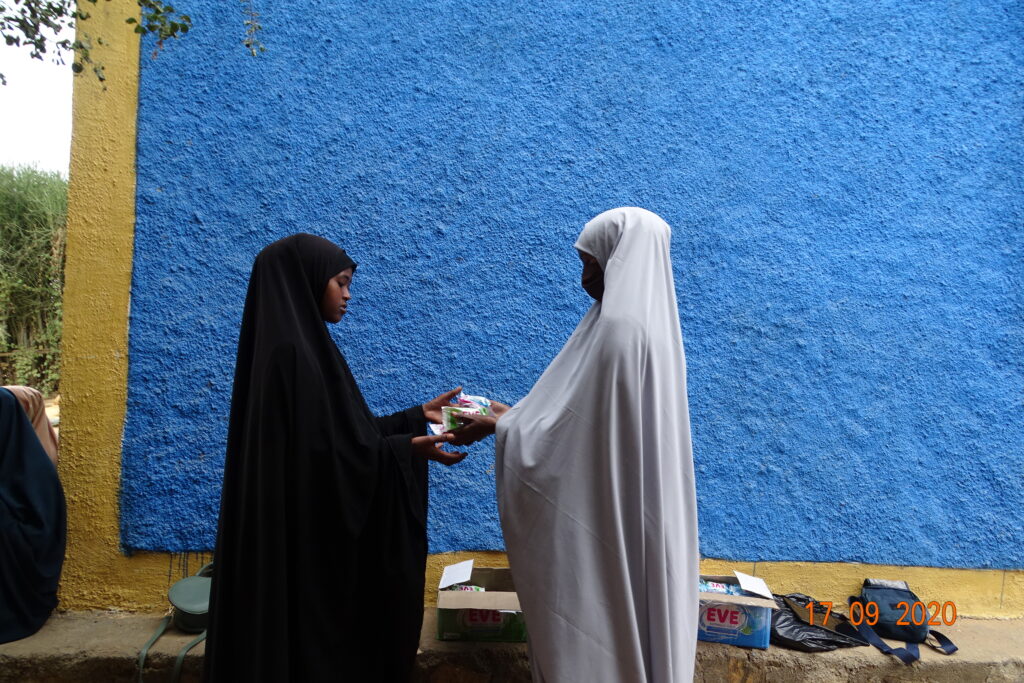
Over 517-female (363 Women and 154 Girls) either victims of GBV or those at imminent risk through emergency cash support.
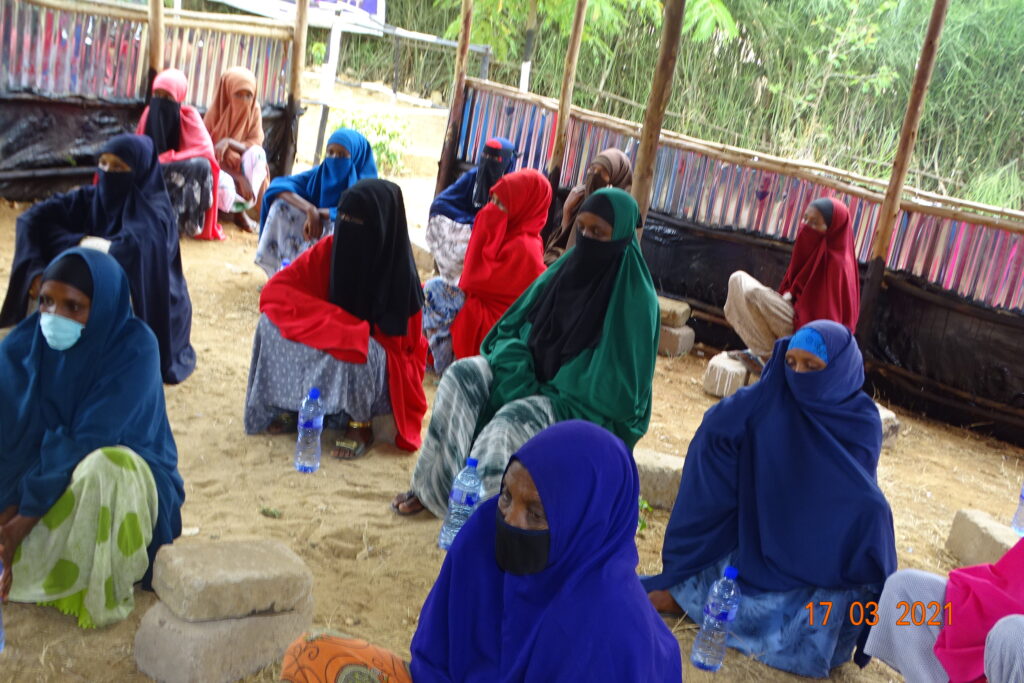
Over 274 Female (101 girls and 173 women) through basic psychosocial support including through GBV Case management services.
protection
Key Lessons
Key Lessons learnt from the implementation of our Protection interventios so far are:
▶ It is vital to create opportunities for the less powerful and marginalized community members get opportunities to participate on issues that affects their specific needs and concerns through empowering them make informed choices.
▶ Influential family members of the women and children facing acute protection risks should be supported and encouraged to accept and be supportive for the protection of affected family members and holding perpetrators to account to create safer family environment for women, girls and children.
▶ Effective protection requires meaningful engagement of the target community and their expressive participation that goes beyond dialogue and risk assessment. It requires their active, collaborative and coordinated engagement to help reduce protection risks facing women and children.
▶ Effective protection calls for a reorientation of the humanitarian protection discourse and practice that embraces the protective agency of crisis-affected communities and their rights to safety, security and dignity.


Get in Touch
Contact Us
Find our contact details and get in touch with our team for any information you would like to know about us.

Kirkos Sub city, Woreda 07, AN Business Center, 4th floor, P. O. Box: 18500; Addis Ababa-Ethiopia
+251 115 318141
Send Us a Message
Use the form below to reach out to us. We\’ll get back to you as soon as possible.